Category Archives: Leadership

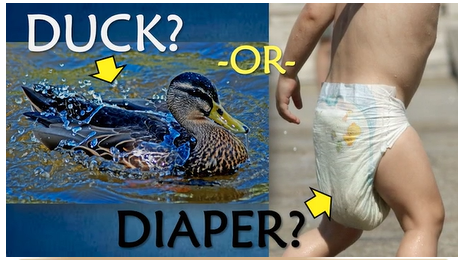
Responding to Confrontation – The duck or diaper response

Source: http://www.davidbowmanart.com

How do you respond to someone that has been unkind, insulting, offensive and/or confrontational to you deliberately or accidentally with or without their knowledge? This question arose during a family discussion after watching episode of a “Draw In” videos (http://www.davidbowmanart.com).

Think of an unkind action or confrontation as water.  Are you unkind, unforgiving, offended, grudgeful, feel victimized, bothered, and/or angry in return? If you do, these responses will continue to slow you down like a wet, full, and saggy diaper.  You will continue to fill up your diaper with negative energy and see the world with a negative attitude. I think that a lot of us, including myself, often respond to anger or confrontation with the same emotions. It is human nature. This can occur in various settings, like work, school, online, via a text message or with family members, but especially in political situations. How much better would we all be if we responded with empathy, understanding, grace, and forgiveness? What if we let unkindness “roll of our backs” like a duck does with water.

Now, I know that letting unkindness roll of our backs seems impossible, especially in the heat of the moment and when someone has truly hurt you. I encourage you to try by gaining an understanding and perspective of the person that was unkind to you.

Who was Rick Rescorla?

No simple blog post can characterize all the feelings associated with 9/11. I can only pay a simple tribute to the heroes and victims of 9/11 by reading stories related to this dark day in world history.  I am reflective and appreciative of the heroes and my freedom on this day. I teach my kids to do the same thing.

In this post, I pay tribute to Rick Rescorla.  I encourage you to read the stories posted on  http://rickrescorla.com/.

rick-rescorla

Rick Rescorla, Jorge Velazquez and Godwin Forde – leading the evacuation on 9/11 (Grunwald, 2001)

Below is an excerpt from “A Tower of Courage” by Michael Grunwald from the Washington Post (October 28, 2001).  I chose this excerpt because it has takeaways for CISOs.

___________

After the truck bombing that year, Rescorla had warned Hill: Next time by air. He expected a cargo plane, possibly loaded with chemical or biological weapons. In any case, he insisted on marching his troops through evacuation drills every few months. The investment bankers and brokers would gripe, but Rescorla would respond with his Seven P’s: Proper prior planning and preparation prevents poor performance. He wanted to develop an automatic flight response at Morgan Stanley, to burn it into the company’s DNA.

According to Barbara Williams, a security guard who worked for him for 11 years, Rescorla was in his office when the first plane hit. He took a call from the 71st floor reporting the fireball in One World Trade Center, and he immediately ordered an evacuation of all 2,700 employees in Building Two, as well as 1,000 Morgan Stanley workers in Building Five across the plaza. They walked down two stairways, two abreast, just as they had practiced. Williams could see Rescorla on a security camera with his bullhorn, dealing with a bottleneck on the 44th-floor lobby, keeping people off the elevators.

“Calm, as always,” she says.

In his cell phone call to Hill, Rescorla said he had just spoken to a Port Authority official, who had told him to keep everyone at their stations. “I said: Everything above where that plane hit is gonna collapse,” Rescorla recounted to Hill. “The overweight will take the rest of the building with it. And Building One could take out Building Two.”

That, of course, is not exactly what ended up happening. But by the time the second hijacked jet rammed into the south tower at 9:07 a.m., many Morgan Stanley employees were already out of the building, and just about all of them were on their way out.

__________

The Takeaways

  • Learn from previous attacks, including predicting potentially new ones
  • Use the Seven P’s: Proper prior planning and preparation prevents poor performance
  • Practice, practice and practice incident response plans and procedures
  • Adopt a philosophy of changing the DNA of people’s behaviors when it comes to security
  • Be prepared to handle “griping” by the individuals you are protecting
  • Use the OODA loop in incident response: Observe, Orient, Decide, Act
  • Be decisive
  • Be calm during incident


What is a good quote on writing skills and leadership?

Clear leadership, expressed in writing, creates alignment and boosts productivity. For example, in writing email, managers from the CEO on down must set an example by communicating exactly what they want, clearly, in the subject line or title and the first two sentences of everything they write. The workers reading it will just skip to the key facts anyway, so lose the filler and don’t waste their time.

….Clear writing uses well-organized, active-voice sentences to explain what is happening, what ought to happen, and what people need to do. Conversely, inexact and passive language reflects gaps in thinking…Requiring clear, direct, active language has two benefits. It forces writers to think through what they really mean and the arguments they can use to support it. And it makes smart people stand out. If you prize clarity, the clear thinkers will rise to the top. ~ Josh Bernoff (2016, Bad Writing is Destroying Your Company’s Productivity).

What is a quote on self awareness?

Highly accomplished people have an inner voice and pay attention to it. They understand the defining moments of their lives and thereby better understand their own strengths, biases, and weaknesses as leaders. And that understanding provides them with a deep well of energy and passion that they draw on throughout their lives. We may not all have careers that match the 100 people I interviewed, but we can all share their ability to grasp — and harness — the turning points of our lives and careers~ Bernie Swain (2016)